The changing sounds of Bastar can now be heard and felt in villages deep within the forests of southern Chhattisgarh. The rattle of gunfire and the echo of explosions that once defined life in the rugged terrain of Bastar are beginning to fade. In their place, the steady beat of the mandar and the rhythms of celebration are returning.
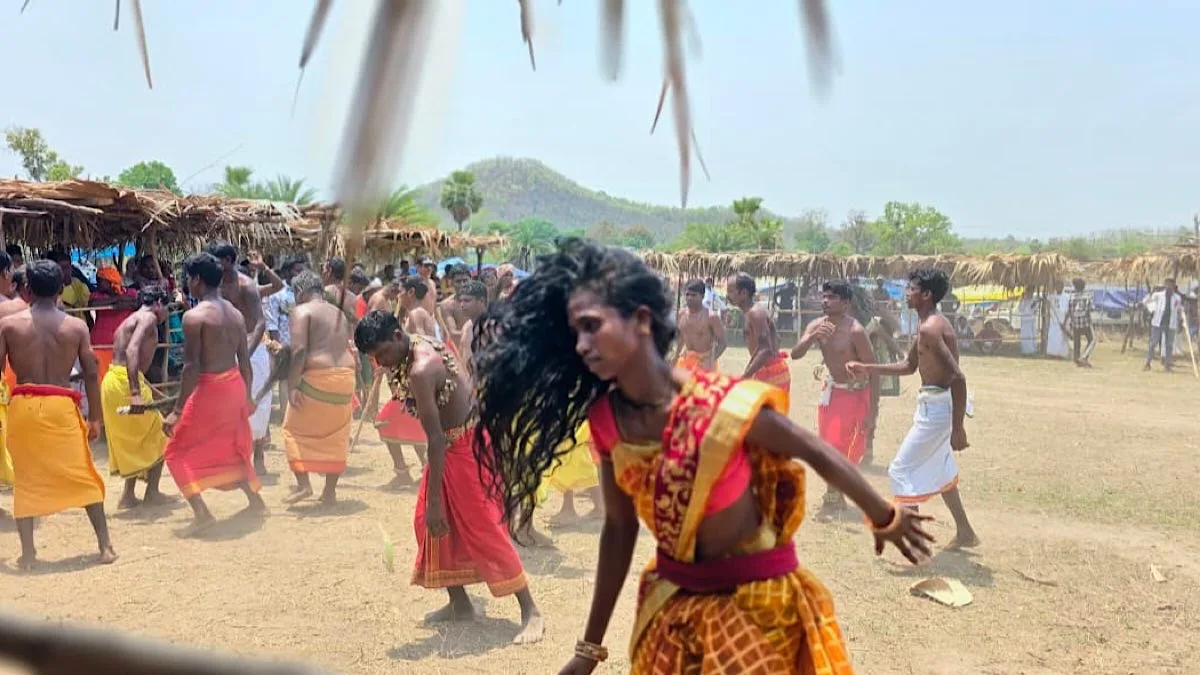
In Bhejji, a small village in Sukma district’s Konta block in the Bastar division, a traditional fair was held from April 16 to 18 after a gap of nearly three decades. For residents, it marked the return of a way of life that had long been interrupted.
Advertisement
Thousands of tribal villagers gathered without fear, taking part in processions, rituals, and celebrations rooted in their traditions. Drums and songs filled the air—sounds of festivity that had long been absent from village life. A week earlier, a similar change was visible in Dornapal, where a traditional fair saw large participation for the first time since 2005.
Bhejji was once among the areas most affected by Maoist violence in Bastar. After 1998, diktats from insurgents brought public celebrations to a halt. Fairs stopped altogether, and movement between villages became restricted. Evenings would fall into deep silence, with people avoiding stepping out. The fear ran so deep that even speaking about organising a tribal ritual became difficult.
Despite this, villagers held on to their faith in quieter ways. Each year, they offered prayers to Korraj Dev, their local deity, often doing so discreetly and without gathering, keeping the tradition alive as best they could.
Over time, generations grew up without experiencing open celebrations. Festivals passed, but without the sense of community that once defined them.
Last week, a three-day fair began at the Korraj Dev shrine, drawing participation from 138 villages. Thousands arrived carrying palanquins and symbols of their deities, many travelling long distances through forested routes to be part of the occasion.
There was a visible sense of release. Men, women, children, and elders gathered freely, moving through the fairgrounds without hesitation. For many, it felt like stepping back into a life that had long been on hold.
Local residents say the change is visible in everyday life. There was a time when even travelling from one village to another required permission from Maoist groups. Social gatherings were discouraged. During festivals, families largely stayed indoors, and celebrations remained muted.
These days, villagers are moving freely. People from distant settlements are meeting again, embracing one another and taking part in cultural traditions without fear. The expressions seen at the fair—marked by relief and joy—reflect a deeper shift that words often struggle to capture.
The participation of people from 138 villages has been widely noted. Senior journalist Manish Gupta sees it as more than a cultural gathering. In his words, “It signals a gradual return to normal life and a renewed confidence among communities.”
In Bastar, where festivals are closely tied to tribal identity and social life, this revival carries deep significance. It suggests that areas once held back by conflict are beginning to reopen.
In Bhejji, the drums have returned after nearly three decades. Their sound is familiar to the locals, but this time it carries a new meaning—it speaks of a region slowly finding its footing again, one step at a time, through gatherings, celebrations, and the simple joy of living without fear.